Harma, Mehmet

Loading...
Profile Picture
Name Variants
Harma, Mehmet
M.,Harma
M. Harma
Mehmet, Harma
Harma, Mehmet
M.,Harma
M. Harma
Mehmet, Harma
Harma,M.
Mehmet Harma
Harma, M.
Job Title
Doç. Dr.
Email Address
Main Affiliation
Psychology
Psychology
03. Faculty of Economics, Administrative and Social Sciences
01. Kadir Has University
Status
Former Staff
Website
ORCID ID
Scopus Author ID
Turkish CoHE Profile ID
Google Scholar ID
WoS Researcher ID

Sustainable Development Goals

3

GOOD HEALTH AND WELL-BEING
GOOD HEALTH AND WELL-BEING Logo

2

Research Products

5

GENDER EQUALITY
GENDER EQUALITY Logo

1

Research Products

10

REDUCED INEQUALITIES
REDUCED INEQUALITIES Logo

1

Research Products

17

PARTNERSHIPS FOR THE GOALS
PARTNERSHIPS FOR THE GOALS Logo

2

Research Products
This researcher does not have a Scopus ID.
This researcher does not have a WoS ID.
Scholarly Output

27

Articles

20

Views / Downloads

177/1621

Supervised MSc Theses

5

Supervised PhD Theses

0

WoS Citation Count

96

Scopus Citation Count

100

WoS h-index

6

Scopus h-index

7

Patents

0

Projects

0

WoS Citations per Publication

3.56

Scopus Citations per Publication

3.70

Open Access Source

10

Supervised Theses

5

Google Analytics Visitor Traffic

JournalCount
International Journal of Psychology3
Current Psychology2
Family Relations1
Health Psychology Report1
Journal of Happiness Studies1
Current Page: 1 / 3

Scopus Quartile Distribution

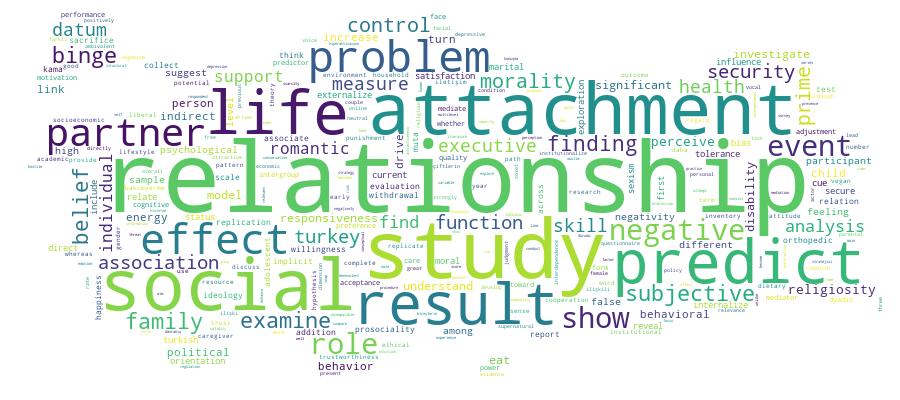
Competency Cloud

GCRIS Competency Cloud

Scholarly Output Search Results

Now showing 1 - 10 of 27
  • Article
    Citation - WoS: 5
    Citation - Scopus: 6
    Is Negativity Bias Intuitive for Liberals and Conservatives?
    (Springer, 2023) Salter, Metin Ege; Duymac, Firat Yavuz; Yilmaz, Onurcan; Bahcekapili, Hasan G.; Harma, Mehmet
    Previous research suggests that conservatives (right-wingers) tend to show more negativity bias than liberals (left-wingers) in several tasks. However, the majority of these studies are based on correlational findings and do not provide information on the cognitive underpinnings of this tendency. The current research investigated whether intuition promotes negativity bias and mitigates the ideological asymmetry in this domain in three underrepresented, non-western samples (Turkey). In line with the previous literature, we defined negativity bias as the tendency to interpret ambiguous faces as threatening. The results of the lab experiment revealed that negativity bias increases under high-cognitive load overall. In addition, this effect was moderated by the participants' political orientation (Experiment 1). In other words, when their cognitive resources were depleted, liberals became more like conservatives in terms of negativity bias. However, we failed to conceptually replicate this effect using time-limit manipulations in two online preregistered experiments during the COVID-19 pandemic, where the baseline negativity bias is thought to be already at peak. Thus, the findings provide no strong evidence for the idea that intuition promotes negativity bias and that liberals use cognitive effort to avoid this perceptual bias.
  • Article
    Citation - WoS: 9
    Citation - Scopus: 11
    Attachment Anxiety Benefits From Security Priming: Evidence From Working Memory Performance
    (Public Library Science, 2018) Gökçe, Ahu; Harma, Mehmet
    The present study investigates the relationship between the attachment dimensions (anxious vs. avoidance) and the cognitive performance of individuals specifically whether the attachment dimensions would predict the working memory (WM) performance. In the n-back task reflecting the WM capacity both attachment related and non-attachment related words were used. Participants were randomly assigned into two groups that received either the secure or the neutral subliminal priming. In the secure priming condition the aim was to induce sense of security by presenting secure attachment words prior to the n-back task performance. In neutral priming condition neutral words that did not elicit sense of security were presented. Structural equation modeling revealed divergent patterns for attachment anxiety and avoidance dimensions under the different priming conditions. In neutral priming condition WM performance declined in terms of capacity in the n-back task for individuals who rated higher levels of attachment anxiety. However in the secure priming condition WM performance was boosted in the n-back task for individuals who rated higher levels of attachment anxiety. In other words the subliminal priming of the security led to increased WM capacity of individuals who rated higher levels of attachment anxiety. This effect however was not observed for higher levels of attachment avoidance. Results are discussed along the lines of hyperactivation and deactivation strategies of the attachment system.
  • Article
    Women's Snap Judgments for Incompatible Facial and Vocal Cues
    (Hogrefe Publishing GmbH, 2024) Harma, M.; Kuru, E.D.
    There has been a paucity of studies exploring the combined impact of facial and vocal cues on attractiveness and trustworthiness evaluations. We examined the concurrent evaluation of attractiveness and trustworthiness when facial and vocal cues were incompatible, such as attractive faces with unattractive voices. We collected data from women participants aged between 20 and 33 years (N = 127, M = 22.19, SD = 2.34). Results revealed that participants evaluated attractive faces with unattractive voices as more attractive, compared to unattractive faces with attractive voice combinations. Moreover, trustworthiness evaluations showed different patterns; participants rated untrustworthy faces with trustworthy voices higher on trustworthiness than trustworthy faces with untrustworthy voice combinations. These findings support the notion that different cues (facial and vocal) play divergent roles in snap judgments. © 2025 Hogrefe Publishing.
  • Article
    Citation - WoS: 9
    The Relationship Between Attachment To God Prosociality and Image of God
    (Sage Publications Ltd, 2018) Bayramoğlu, Yunus; Harma, Mehmet; Yılmaz, Onurcan
    Although religiosity fosters some antisocial behaviors (e.g. support for suicide attacks) it is well-known that it also enhances in-group cooperation and prosociality (e.g. donating to charity). Supernatural punishment hypothesis suggests that the fear of punishment from an invisible potent and powerful supernatural agent can keep everyone in line and encourage prosociality. We first investigated this relationship in a predominantly Muslim country and then tested a model suggesting that attachment to God can lead people to think God as authoritarian which in turn leads them to report more prosocial intentions. The results demonstrate that (1) there are some findings suggesting that Attachment to God Inventory is a reliable measure in Turkey (2) seeing God as authoritarian is positively correlated with prosociality and (3) our abovementioned model was supported by the data. Results generally support the supernatural punishment hypothesis and additionally show the utility of attachment theory in explaining the religiosity-prosociality link.
  • Master Thesis
    Romantik Çiftlerde Doğal İletişim Profilleri ve Bunların İlişkisel Sonuçlarla Bağlantılarını Ortaya Çıkarmak: Sözel ve Sözel Olmayan İletişim İpuçları Üzerine Bir Çalışma
    (2023) Bereket, Kevser; Harma, Mehmet
    Çiftlerin nasıl iletişim kurdukları daha önce kapsamlı araştırmalarla farklı yönleriyle ele alınmış ve ilişkinin doyumuyla yakından ilişkili olduğu ortaya konulmuştur. Ancak çiftlerin olumlu iletişim tarzları sergilemeleri, her zaman ilişkilerinden memnun oldukları anlamına gelmediği gibi, olumsuz iletişim biçimleri de ilişkilerin biteceğine işaret etmeyebilir. Ayrıca, mevcut olumsuz iletişim biçimlerinin gelecekteki ilişki doyumunu yordadığını gösteren araştırmalar da literatürde zaman içerisinde daha yaygın olmaya başlamıştır. Daha önceki çalışmaların çelişkili bulgulara ulaştığı göz önüne alındığında, çiftlerin farklı konuşma koşullarındaki (Çatışma, Pozitif Anı Paylaşımı, Mürekkep Lekeleri Üzerine Nötr Konuşma) iletişimini boylamsal şekilde incelememiz alandaki bu çelişkiyi daha kişi odaklı analiz yöntemleriyle aydınlatmak üzerine yoğunlaşmıştır. 3 farklı konuşma koşulunda sergilenen hem sözel (Duygulanım ve Bilişsellik Kelimeleri Kullanımı) hem de sözel olmayan (Sıra Alma Davranışları) göstergeleri kullanarak yaptığımız araştırma sonucunda 2 ayrı çift profiline ulaştık: İşbirlikçi-Tutkulu Çiftler ve Pragmatik Çiftler. Nötr ve pozitif konuşma koşullarında İşbirlikçi-Tutkulu çiftlerin Pragmatik çiftlere kıyasla üç ay sonra daha yüksek ilişki kalitesi bildirdiği sonucuna ulaştık. Sonuç olarak, bu tez çalışması, sözel ipuçlarının yanı sıra sözel olmayan iletişim ipuçlarının ve kişi tabanlı sınıflandırma yöntemlerinin kullanımının önemini vurgulamaktadır.
  • Article
    Citation - WoS: 1
    Citation - Scopus: 2
    Predictors of Subjective Health Among Spouses and Its Relations With Happiness: A Multilevel Analysis in a Nationwide Survey in Turkey
    (Springer, 2024) Tosyali, Furkan; Coban-Tosyali, Ezgi; Harma, Mehmet
    The current study aims to examine predictors of subjective health, including its relation with happiness, at the individual and family levels. For this purpose, we analyzed data collected from spouses representing each family (9,634 families, N = 19,268). A multilevel analysis was conducted to examine both individual- and family-level variables associated with subjective health evaluations. Individual-level variables were gender, age, education, employment, presence of chronic illness, smoking, alcohol use, and individual happiness. Family-level variables were socioeconomic status, number of children, household size, length of the marriage (in a year), presence of an elderly person who needs care in the household, presence of a disabled person who needs care in the household, and family happiness. The results showed that subjective health is enhanced by being man, younger, employed, highly educated, free from chronic illness, and experiencing greater levels of happiness at the individual level. In addition, poorer subjective health is associated with caring for an elderly or disabled family member and having a higher number of children in the household at the family level. However, individuals had better subjective health at the family level when socioeconomic status was higher, greater family happiness, and greater household size existed. The current study is important since research that simultaneously considers individual- and family-level happiness has been scarce in the literature. Thus, the findings would enhance the current understanding of the link between happiness and health.
  • Article
    Citation - WoS: 5
    Negative Life Events Behavior Problems and Self-Regulation of Adolescents From Low Socio-Economic Status
    (Turkish Psychologists Assoc, 2017) Metin, Güntülü Tercanli; Harma, Mehmet; Gökçay, Gülbin; Bahçıvan-Saydam, Reyhan
    The aim of the study was to examine the relationship between negative life events and emotional-behavioral problems among adolescents from low SES and the mediator role of self-regulation (SR) in this relationship. The study consisted of a sample of 358 7th and 8th grade-students living in Esenler neighborhood Istanbul. Students were asked to complete a series of questionnaires including Demographic Information Form Life Events Checklist Self-Regulation Inventory and Youth Self Report (YSR). Path Analysis was run to examine the associations between negative life events and internalizing-externalizing problems via self-regulation. Stability of these relationships across gender was also examined by multiple-group path analysis. Results showed that negative life events predicted both internalizing and externalizing problems directly and indirectly via self-regulation. As the number of negative life events increased the level of self-regulation skills deteriorated in turn it predicted internalizing and externalizing problems. Negative life events more strongly predicted internalizing problems than externalizing problems whereas self-regulation more strongly predicted externalizing problems than internalizing problems. Besides the relationship between negative life events and emotional-behavioral problems and the mediator role of self-regulation in the link between negative life events and problem behaviors did not change across gender. These findings were discussed in relation to the relevant literature focusing on the indicators and outcomes of self-regulation skills among adolescents.
  • Master Thesis
    Association Between Perceived Partner Responsiveness and Binge Eating Behavior :mediating Role of the Interpersonal Emotion Regulation
    (Kadir Has Üniversitesi, 2018) Tosyali, Ahmet Furkan; Harma, Mehmet
    Main aim of this study is to investigate whether there were relationship between perceived partner responsiveness (PPR) co-regulation between romantic partners and binge eating. Data were collected from 148 adult females and their male romantic partners (18-61 years old) with mean relationship duration of 8.04 years. Dyadic data was analyzed through actor-partner interdependence model framework. We proposed a model where co-regulation between partners mediates the relationship between PPR and binge eating. Results showed that there was not direct association between any of PPR and binge eating scores of participants. However significant direct associations were found regarding both actor and partner effects of PPR on co-regulation between romantic partners. Besides there were four mediational pathways where co-regulation of females mediated the associations. Co-regulation of females mediated the association between both actor and partner effects of PPR on their binge eating scores. Coregulation of female participants also mediated actor effect of PPR on binge eating scores of male participants. indirect significant associations still remained after controlling for influence of body dissatisfaction on binge eating scores. These findings are the first to illustrate relationship between PPR and binge eating. Also this study is the first attempt to examine binge eating in terms of interpersonal emotion regulation processes.
  • Article
    Citation - WoS: 17
    Citation - Scopus: 18
    Executive Function and Theory of Mind as Predictors of Socially Withdrawn Behavior in Institutionalized Children
    (Wiley, 2018) Selçuk, Bilge; Yavuz, H. Melis; Etel, Evren; Harma, Mehmet; Ruffman, Ted
    False belief understanding and executive functions are two main sociocognitive abilities reliably linked to child social competence. Although institution reared children are especially at risk for behavioral problems and cognitive delays, the role that executive function and false belief understanding might play in the social withdrawal of institutionalized children has not been examined. The current study used twöwave data to investigate the concurrent and longitudinal relations of social withdrawal with executive function and false belief understanding in institutionalized children; it also allowed investigation of the directionality between executive function and false belief understanding. Data were collected from 66 Turkish children (T1 M = 57.83 months, SD = 9.20; T2 M = 69.58 months, SD = 8.45) residing in institutions, at two time points, approximately 1 year apart. We measured false belief understanding and executive function via individual assessments, and social withdrawal via care provider reports at both time points. Results showed that both executive function and false belief understanding increased between T1 and T2, while social withdrawal did not show a significant change. Path analysis revealed that when T1 age and language were controlled, T1 executive function predicted T2 executive function, and in turn, T2 executive function predicted lessened social withdrawal at T2. In addition, T1 executive function predicted T2 false belief understanding. T1 false belief understanding was not related to T2 false belief understanding, executive function, or social withdrawal. Findings suggested that executive function is an important predictor of social withdrawal in high risk populations.
  • Article
    Citation - WoS: 3
    Citation - Scopus: 3
    Examining Actor-Partner Effects Between Social Dominance, Relationship Power, Sexism, and Marital Quality
    (Wiley, 2023) Ymamgulyyeva, Aysoltan; Kafescioglu, Niluefer; Harma, Mehmet
    Objective: This study aimed to investigate the actor-partner effects of attitudes toward group-based inequality as measured by social dominance orientation (SDO) and marital quality, and the indirect actor-partner effects of SDO on marital quality via ambivalent sexism and partners' perceptions of their own relationship power toward their partner. Background: Previous research suggests that certain social attitudes play a role in relationship processes. However, it is unclear whether broader views on social inequality could have an effect on partners' marital quality. Method: Ninety heterosexual married couples in Turkey (N = 180) responded via an online survey on SDO, marital quality, relationship power, and ambivalent sexism. Actorpartner interdependence model (APIM) and actor-partner interdependence model of mediation (APIMeM) were conducted to examine the direct and indirect actor-partner effects. Results: For indirect effects, men's SDO was negatively associated with their marital quality through their relationship power and hostile sexism. No significant indirect effects were found for women. However, women's relationship power was positively and their benevolent sexism was negatively associated with their own and their partners' marital quality. Conclusion: Our findings help develop a more comprehensive understanding of how the political, social, and personal aspects of our lives are connected with one another. Implications: Our study points to the importance of exploring the topic of men's and women's views toward social inequality and its effects on their close relationships in clinical practice and relational education.