
Soyman, Efe
Loading...

Profile URL
Name Variants
Soyman, Efe
E.,Soyman
E. Soyman
Efe, Soyman
Soyman, Efe
E.,Soyman
E. Soyman
Efe, Soyman
E.,Soyman
E. Soyman
Efe, Soyman
Soyman, Efe
E.,Soyman
E. Soyman
Efe, Soyman
Job Title
Dr. Öğr. Üyesi
Email Address
Main Affiliation
Psychology
Status
Former Staff
Website
ORCID ID
Scopus Author ID
Turkish CoHE Profile ID
Google Scholar ID
WoS Researcher ID
Sustainable Development Goals
SDG data is not available

This researcher does not have a Scopus ID.

This researcher does not have a WoS ID.

Scholarly Output
5
Articles
3
Views / Downloads
55/0
Supervised MSc Theses
2
Supervised PhD Theses
0
WoS Citation Count
0
Scopus Citation Count
0
Patents
0
Projects
0
WoS Citations per Publication
0.00
Scopus Citations per Publication
0.00
Open Access Source
1
Supervised Theses
2
| Journal | Count |
|---|---|
| British Journal of Psychology | 1 |
| Journal of Experimental Psychology-General | 1 |
| Scientific Reports | 1 |
Current Page: 1 / 1
Scopus Quartile Distribution
Competency Cloud
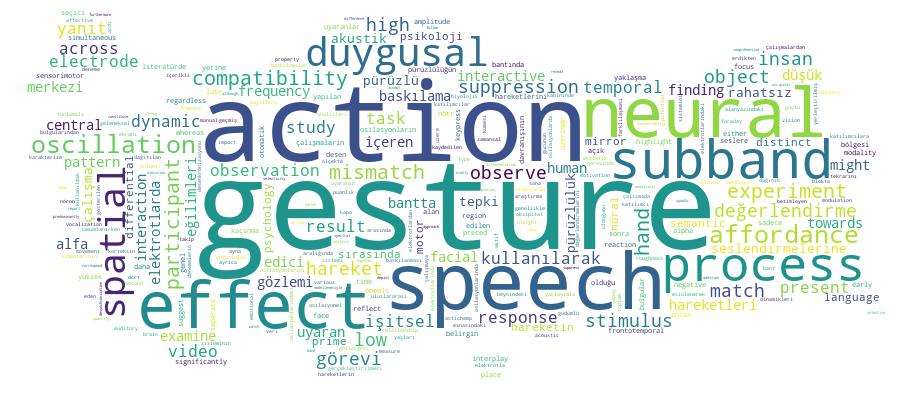
5 results
Scholarly Output Search Results
Now showing 1 - 5 of 5
Article Distinct Temporal Dynamics of Speech and Gesture Processing: Insights From Event-Related Potentials Across L1 and L2(American Psychological Association, 2026) Ozer, Demet; Soyman, Efe; Badakul, Ayse Nur; Arslan, Burcu; Yilmaz, Fatma Sena; Goksun, TilbeThis study examined the neural and behavioral processing of speech and iconic gestures across L1-Turkish and L2-English when participants attended the speech or gesture channel. We recorded electroencephalogram activity in Experiment 1 and reaction times in Experiment 2 (24 participants in each) during a mismatch task where concurrent speech and gesture expressed either matching or mismatching information in relation to a preceding action. Participants were asked to detect whether the gesture (gesture-focused task) or the speech (speech-focused task) was related to the preceding action. Speech was presented in Turkish or English in separate blocks. In Experiment 1, we focused on N400 and N2 components as indices of late semantic processing and early sequential matching, respectively. In the gesture-focused task, our results demonstrated a gesture mismatch effect, which was evident in more negative N400 amplitudes for mismatching than matching gestures only in the context of simultaneous matching speech. In the speech-focused task, we observed the N2 effect, which was apparent in more negative N2 amplitudes for mismatching than matching speech, regardless of the simultaneous gesture. These dynamics were largely reflected in reaction times in Experiment 2. These results point to potentially distinct neural and temporal dynamics in processing speech versus gestures and suggest that speech processing might be instantiated earlier, whereas gestures recruit later stages of processing. Notably, we observed some differential patterns across L1-Turkish and L2-English, suggesting that speech and gesture processing may operate differently across languages. Our findings highlight a complex interplay between modality, modality focus, language, and neural processing of multimodal information.Article The Impact of Response Type on Affordance and Spatial Compatibility Effects in Human and Object Interactions(Wiley, 2024) Demir, Pinar; Sandikci, Melda; Demir, Eda; Soyman, EfeEveryday social interactions or goal-directed actions towards objects activate action plans appropriate to their affordances. The spatial compatibility of a stimulus and a response might interfere with the activation of these action plans. In the present study, we examined how framing of interactions affects the interplay between affordance and spatial compatibility effects towards humans and objects in two separate experiments. In a motor priming task designed to simultaneously assess these two effects, participants were presented with interactive hand gestures and objects with a single handle. Participants responded either with their left or right hand according to the colour mask of the stimulus, regardless of the spatial position or the affordance-related orientation of the stimulus. In Experiment 1, when responses were given by keypresses, we found independent affordance and spatial compatibility effects towards objects. Surprisingly, interactive hand gestures induced a reversed affordance effect, that is, imitative action tendencies. Changing the responses from keypresses to the performance of grasping actions in Experiment 2 drastically altered these findings, resulting in the enhancement of affordance and the elimination of spatial compatibility effects for both human and object interactions. These findings highlight the importance of contextual influences on the emergence of automatic action tendencies.Master Thesis Akustik Pürüzlülük ve Duygusal Seslendirmelerin Yaklaşma- Kaçınma Motivasyonlarına Olan Etkisinin İncelenmesi(2024) Demir, Pınar; Soyman, Efe; Özer, DemetÇevremiz, otomatik olarak en uygun tepkiyi seçmemizi gerektiren hoş, iştah açıcı veya hoş olmayan, tehdit edici uyaranlarla çevrilidir. Literatürde sözel uyaranlar ve duygusal yüz ifadeleri için duygulanım-uyumlu yaklaşma-kaçınma motivasyonlarının otomatik olarak etkinleştirildiği tutarlı bir şekilde rapor edilmiştir. Ancak duygusal işitsel uyaranlar kullanılarak yaklaşma ve kaçınma eğilimleri üzerine yapılan araştırmalar nispeten azdır. Mevcut tez çalışması, duygusal bilgi aktaran veya potansiyel olarak dinleyicide olumsuz algılara yol açan çeşitli insan seslendirmelerine yanıt olarak yaklaşma-kaçınma motivasyonlarını araştırmayı amaçlamıştır. Çalışma 1'de, Yaklaşma-Kaçınma Görevi ve Cinsiyet Değerlendirme Görevi kullanılarak insan duygusal seslendirmelerine tepki olarak yaklaşma-kaçınma eğilimleri araştırılmıştır. Bulgular, Yaklaşma-Kaçınma Görevindeki uyumluluk etkilerini ortaya koyarak duygusal işitsel uyaranları kullanan önceki çalışmaları tekrarlamıştır. Çalışma 2'de, işitsel sinyallerin algısal olarak rahatsız edici ve tehlike çağrıştıran özelliği olan akustik pürüzlülüğe yanıt olarak yaklaşma-kaçınma eğilimleri, nötr ve pürüzlülük eklenmiş insan seslendirmeleri kullanılarak araştırılmıştır. Bulgular, yanıtlar akustik pürüzlülüğün açık bir şekilde değerlendirilmesine bağlı olduğunda ne rahatsız edici pürüzlü insan seslendirmelerine karşı kaçınma davranışının ne de nötr seslendirmelere yaklaşma davranışının bulunduğunu göstermiştir. Bunun yerine, pürüzlü seslere yanıt olarak tepki hızında genel bir artış gözlemlenmiştir. Pürüzlü seslere tepki hızının artmasının açık değerlendirmelerden kaynaklanıp kaynaklanmadığını daha ayrıntılı olarak incelemek için, Çalışma 3'te katılımcılardan pürüzlülük yerine sesteki sesli harfleri değerlendirmeleri istenen bir kontrol görevi uygulanmıştır. Göreve ilişkin yönergenin değiştirilmesi, pürüzlülüğün genel yanıt kolaylaştırma etkisini tamamen ortadan kaldırmıştır. Üç deneyde hem duygusal seslendirmelerin hem de akustik pürüzlülük içeren seslerin duygusal değerlik, uyarılmışlık ve rahatsız edicilik açısından benzer uyaran özelliklerini paylaşmasına rağmen örtük davranışsal etkilerinin farklı olduğu gösterilmiştir.Master Thesis Başkalarının Davranışlarını Gözlemlerken Ölçülen Mu Baskılaması ile Çeşitli Uyaran Özellikleri Arasındaki İlişkinin İncelenmesi(2024) Badakul, Ayşe Nur; Özer, Demet; Soyman, EfeMu baskılanması, merkezi elektrotlarda bir hareketin gözlemi ve gerçekleştirilmesi sırasında nöral osilasyonların desenkronizasyonu ile karakterize edilen, insan beynindeki ayna nöron sisteminin göstergesi olarak, önemli bir araştırma noktasıdır. Alanyazındaki önemli bir eksiklik, çalışmaların çoğunluğun, geçmiş çalışmalardan sonra mu osilasyonlarını geleneksel alfa frekans aralığında (8-13 Hz) nicelendirmesidir. Bu çalışmada, literatürde genellikle göz ardı edilen çalışmaların dağınık bulgularından esinlenerek, el, yüz ve yapay desen hareketlerini içeren hareket videolarının gözlemi esnasındaki osilasyonel gücünün dinamikleri veri güdümlü bir yaklaşımla incelenmiştir. Çalışmaya, 19 ile 34 yaşları arasında (Ortalama=22, SD=3; kadın/erkek=24/6) toplam 30 katılımcı alınmıştır. EEG kayıtları, hareket değerlendirme görevi tamamlanırken, uluslararası 10-20 sistemini takip eden bir kapa yerleştirilmiş 32 aktif elektrotla Brain Vision actiCHamp sistemi kullanılarak Faraday kabininde toplanmıştır. Bu hareket değerlendirme görevinde kullanılmak üzere, el, yüz veya desen hareketlerini betimleyen 156 gri tonlamalı video içeren bir uyaran kümesi oluşturulmuştur. Hareket değerlendirme görevi, dört blokta yarı-random olarak dağıtılan 312 deneme için her biri 156 video uyaranın iki tekrarını içermektedir. Tüm denemelerin 1/4'ünde (78 deneme) video sona erdikten sonra katılımcılara bir hareket değerlendirme ekranı sunulmuş ve katılımcılar 9 puanlık bir ölçekte değerlendirmelerini yapmıştır. Yapılan zaman-frekans analizleri, hareketlerin gözlemi sırasında sadece düşük mu alt bantında (8-10.5 Hz) merkezi EEG elektrotlarındaki nöral osilasyonlarda anlamlı bir baskılama olduğunu göstermiştir. Ancak yüksek mu alt bantında (10.5-13 Hz) baskılama görülmemiştir. Alfa osilasyonlarındaki alt bant farklılaşması, oksipital elektrotlardan kaydedilen alfa osilasyonlarında belirgin olarak görülmemiştir. Düşük alt bantta, sensori-motor korteksin el bölgesi üzerinde yer alan merkezi elektrotlarda el hareketleri için ve yüz bölgesi üzerinde yer alan frontal-temporal elektrotlarda yüz hareketleri için belirgin ve seçici olarak daha güçlü baskılamalar bulunmuştur. Yüksek alt bantta, seçici baskılama sadece frontal-temporal elektrotlarında yüz hareketleri için görülmüştür. Ayrıca, düşük alt bantta osilasyonların, videolarda gösterilen biyolojik hareketin zamansal modellemesiyle uyumlu olduğu görülmüştür.Article Differential Modulation of Low- and High-Frequency Mu Oscillations During the Observation of Manual, Facial, and Non-Biological Movements(Nature Portfolio, 2025) Badakul, Ayse Nur; Soyman, EfeMu suppression - desynchronization of neural oscillations in central EEG electrodes during action execution and observation - has been widely accepted as a marker for neural mirroring. It has been conventionally and predominantly quantified in the 8-13 Hz range, corresponding to the alpha frequency band, although few studies reported differences in lower and higher subbands that together constitute the mu frequency band. In the present study, we adopted a comprehensive analytical approach to examine the spectral and temporal dynamics of mu suppression when participants watched videos depicting hand and face actions and artificial pattern movements. Our analyses in central EEG electrodes revealed that neural oscillations were significantly suppressed during action observation only in the lower (8-10.5 Hz), not in the higher (10.5-13 Hz), subband. No such subband differentiation was observed for the alpha oscillations in the occipital electrodes. In addition, in the lower subband, significantly stronger suppressions were selective for hand actions in the central EEG electrodes placed over the hand region of the sensorimotor cortices and for facial actions in the frontotemporal electrodes placed over the face region of the sensorimotor cortices. In the higher subband, such stimulus selectivity was only observed for facial actions in the frontotemporal electrodes. Furthermore, the neural oscillations in the lower, but not the higher, subband followed the precise temporal patterning of biological motion in the videos. These results indicate that neural oscillations in the lower subband show the characteristics of neural mirroring processes, whereas those in the higher subband might reflect other mechanisms.
