
Aydın, Mehmet Nafiz
Loading...

Profile URL
Name Variants
Mehmet Nafiz, Aydin
MEHMET NAFIZ AYDIN
Aydın, MEHMET NAFIZ
Mehmet Nafiz AYDIN
AYDIN, MEHMET NAFIZ
Mehmet Nafiz Aydın
Aydın, M.
Aydin,M.N.
Aydin M.
Aydin,Mehmet Nafiz
Aydin, Mehmet Nafiz
A., Mehmet Nafiz
Aydın, M. N.
Aydın,M.N.
Aydın, Mehmet Nafiz
Nafiz Aydin M.
M. Aydın
M. N. Aydın
AYDIN, Mehmet Nafiz
Aydın M.
A.,Mehmet Nafiz
Aydin, Mehmet
Aydin, Mehmet N.
Aydın, M.N.
MEHMET NAFIZ AYDIN
Aydın, MEHMET NAFIZ
Mehmet Nafiz AYDIN
AYDIN, MEHMET NAFIZ
Mehmet Nafiz Aydın
Aydın, M.
Aydin,M.N.
Aydin M.
Aydin,Mehmet Nafiz
Aydin, Mehmet Nafiz
A., Mehmet Nafiz
Aydın, M. N.
Aydın,M.N.
Aydın, Mehmet Nafiz
Nafiz Aydin M.
M. Aydın
M. N. Aydın
AYDIN, Mehmet Nafiz
Aydın M.
A.,Mehmet Nafiz
Aydin, Mehmet
Aydin, Mehmet N.
Aydın, M.N.
Job Title
Doç. Dr.
Email Address
Main Affiliation
Management Information Systems
Status
Current Staff
Website
ORCID ID
Scopus Author ID
Turkish CoHE Profile ID
Google Scholar ID
WoS Researcher ID
Sustainable Development Goals
 1
1NO POVERTY
0
Research Products
 2
2ZERO HUNGER
5
Research Products
 3
3GOOD HEALTH AND WELL-BEING
7
Research Products
 4
4QUALITY EDUCATION
2
Research Products
 5
5GENDER EQUALITY
0
Research Products
 6
6CLEAN WATER AND SANITATION
0
Research Products
 7
7AFFORDABLE AND CLEAN ENERGY
0
Research Products
 8
8DECENT WORK AND ECONOMIC GROWTH
2
Research Products
 9
9INDUSTRY, INNOVATION AND INFRASTRUCTURE
8
Research Products
 10
10REDUCED INEQUALITIES
2
Research Products
 11
11SUSTAINABLE CITIES AND COMMUNITIES
0
Research Products
 12
12RESPONSIBLE CONSUMPTION AND PRODUCTION
1
Research Products
 13
13CLIMATE ACTION
0
Research Products
 14
14LIFE BELOW WATER
4
Research Products
 15
15LIFE ON LAND
0
Research Products
 16
16PEACE, JUSTICE AND STRONG INSTITUTIONS
1
Research Products
 17
17PARTNERSHIPS FOR THE GOALS
1
Research Products

Documents
63
Citations
681
h-index
15

Documents
50
Citations
416

Scholarly Output
67
Articles
29
Views / Downloads
536/5384
Supervised MSc Theses
13
Supervised PhD Theses
5
WoS Citation Count
187
Scopus Citation Count
339
Patents
0
Projects
0
WoS Citations per Publication
2.79
Scopus Citations per Publication
5.06
Open Access Source
34
Supervised Theses
18
| Journal | Count |
|---|---|
| Applied Sciences | 4 |
| Computers and Electronics in Agriculture | 3 |
| Journal of research in business (online) | 2 |
| Alphanumeric Journal | 1 |
| Applied Sciences (Switzerland) | 1 |
Current Page: 1 / 8
Scopus Quartile Distribution
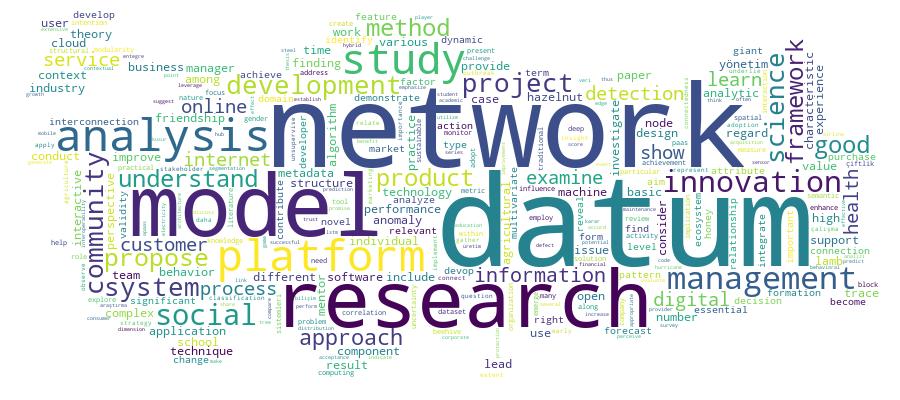
Competency Cloud
67 results
Scholarly Output Search Results
Now showing 1 - 10 of 67
Article Citation - WoS: 3Citation - Scopus: 4Understanding Virtual Onboarding Dynamics and Developer Turnover Intention in the Era of Pandemic(Elsevier Science inc, 2024) Akdur, Gorkem; Aydin, Mehmet N.; Akdur, GizdemThis study examines the dynamics of virtual onboarding (VO) for Salesforce Commerce Cloud developers during the COVID-19 pandemic in a multinational software company. The newly developed Virtual Integration and Retention Framework (VIRF), which provides an improved understanding of VO, customized to the opportunities and challenges presented by the pandemic, is the fundamental concept of this study. A two-staged, higher-order constructed (HOC) quantitative research approach was used for the study, revealing a negative relationship between VO success and the challenges brought on by the pandemic. This emphasizes how difficult it can be to transition to remote work settings, especially regarding how operational effectiveness and employee well-being interact. Furthermore, the study demonstrates the positive connection between VO success and the delivery of technology and equipment during the pandemic. This result emphasizes how important logistical support is to the effectiveness of remote work arrangements. The study's key findings show positive impact of successful VO on developers' job satisfaction and workplace relationship quality (WRQ). Strong VO practices are essential to improve employee retention, as evidenced by the inverse correlation between these factors and turnover intentions. The study uses mediation analysis, with job satisfaction and WRQ acting as mediators, to further clarify how VO success influences turnover intentions. This study offers an in-depth understanding of VO practices during the pandemic. It discusses the future of remote work and onboarding procedures while navigating the immediate difficulties caused by the outbreak. The study emphasizes how important VO is for improving WRQ, decreasing turnover intentions of developers within the software company, and improving job satisfaction. These insights benefit organizations trying to improve developer integration and retention in changing work environments and improve their remote work strategies.Book Part Big data analytics and models(IGI Global, 2019) Sönmez, F.; Perdahçi, Z.N.; Aydin, M.N.When uncertainty is regarded as a surprise and an event in the minds, it can be said that individuals can change the future view. Market, financial, operational, social, environmental, institutional and humanitarian risks and uncertainties are the inherent realities of the modern world. Life is suffused with randomness and volatility; everything momentous that occurs in the illustrious sweep of history, or in our individual lives, is an outcome of uncertainty. An important implication of such uncertainty is the financial instability engendered to the victims of different sorts of perils. This chapter is intended to explore big data analytics as a comprehensive technique for processing large amounts of data to uncover insights. Several techniques before big data analytics like financial econometrics and optimization models have been used. Therefore, initially these techniques are mentioned. Then, how big data analytics has altered the methods of analysis is mentioned. Lastly, cases promoting big data analytics are mentioned. © 2020, IGI Global.Article Citation - WoS: 28Citation - Scopus: 47Unsupervised Anomaly Detection in Multivariate Spatio-Temporal Data Using Deep Learning: Early Detection of Covid-19 Outbreak in Italy(Ieee-Inst Electrıcal Electronıcs Engıneers Inc, 2020) Karadayı, Yıldız; Aydın, Mehmet Nafiz; Öğrenci, Arif SelçukUnsupervised anomaly detection for spatio-temporal data has extensive use in a wide variety of applications such as earth science, traffic monitoring, fraud and disease outbreak detection. Most real-world time series data have a spatial dimension as an additional context which is often expressed in terms of coordinates of the region of interest (such as latitude - longitude information). However, existing techniques are limited to handle spatial and temporal contextual attributes in an integrated and meaningful way considering both spatial and temporal dependency between observations. In this paper, a hybrid deep learning framework is proposed to solve the unsupervised anomaly detection problem in multivariate spatio-temporal data. The proposed framework works with unlabeled data and no prior knowledge about anomalies are assumed. As a case study, we use the public COVID-19 data provided by the Italian Department of Civil Protection. Northern Italy regions' COVID-19 data are used to train the framework; and then any abnormal trends or upswings in COVID-19 data of central and southern Italian regions are detected. The proposed framework detects early signals of the COVID-19 outbreak in test regions based on the reconstruction error. For performance comparison, we perform a detailed evaluation of 15 algorithms on the COVID-19 Italy dataset including the state-of-the-art deep learning architectures. Experimental results show that our framework shows significant improvement on unsupervised anomaly detection performance even in data scarce and high contamination ratio scenarios (where the ratio of anomalies in the data set is more than 5%). It achieves the earliest detection of COVID-19 outbreak and shows better performance on tracking the peaks of the COVID-19 pandemic in test regions. As the timeliness of detection is quite important in the fight against any outbreak, our framework provides useful insight to suppress the resurgence of local novel coronavirus outbreaks as early as possible.Master Thesis Social Network Analysis of Innovation Mentor Community of Practice(Kadir Has Üniversitesi, 2022) ALTINIŞIK, Gunda Esra; Aydın, Mehmet NafizInnovation is directly related to the development of economies, and with the awareness of its criticality, various nation-wide support programs and innovation communities have emerged in recent years. These communities are established along their own specific structures and dynamics that can be examined by their level of connectedness and its underlying members’ attributes. In this research, a government-sponsored innovation mentors’ community of practice (CoP) has been examined. Thus, the members are advised to bring their knowledge to adopt the framework to specific cases and share their experiences with their peers. A CoP stands on the basic premise that the practice (knowhow) is shared among members and stimulates connectedness along their competencies. In this context, the first question is: how to measure the connectedness of the community and whether the CoP under investigation achieves the desired level of connectedness? The second is: what specific mentors’ attributes (competencies) characterize the preferred choices of connectedness? More particularly, how knowledge-sharing preferences are associated by the mentors’ attributes of this CoP? We employed Social Network Analysis techniques and Jaccard Similarity to answer them. The findings reveal that the CoP of innovation mentors is highly connected for a giant component, but low at the network level. Degree, title and institution as the members’ attributes may not play a significant role in the connectedness of this community. Even though mentors meet on a denominator in basic competencies in their cooperation, the findings show that they cooperate interdisciplinary. We argue that the dissimilar competencies of the connected mentors can be considered as a signature of the very idea of connectedness. Further research is needed to validate this claim with richer data, preferably with a temporal aspect.Master Thesis A Network Science Approach To Correlations Between Course Achievement and Community Structure in School Friendship Networks(Kadir Has Üniversitesi, 2017) Kafkas, Kenan; Aydın, Mehmet Nafizin this research we examine a secondary school social network. We apply social network analysis (SNA) techniques on the close friendship structure of the students. Our aim is to answer the following questions regarding the network. The first question is what are the mixing values with respect to test achievement scores gender and class. The second question is how are the communities in the network structured. Such findings can be significant assets in understanding and improving the learning environment. They may be used to help teachers and school managers in deciding more workable and efficient student matchings. For this study we conducted a survey to a group of 10th grade students and gathered the necessary information to construct the social network around the school. Our findings show that the friendship in overall network is neither assortative nor disassortative with respect to academic success in other words the two attributes are not correlated. On the other hand gender and class mixing measures are significantly high which not surprisingly suggests that the students prefer to bond with their classmates and also with the same gender friends. Finally after examining the communities within each classroom we observe similar community structures. in the light of these findings we propose a method for composing the classrooms to construct an efficient and successful learning environment.Conference Object Examination of Centrality in a Health Social Network(IOS Press, 2014) Alasan, Semiha N.; Sayın, Kamran Emre; Aydın, Mehmet NafizGrowing importance of health information platforms are acknowledges in recent studies. Such platforms are subject to discussion about an extent to which social network characteristics are realized. The platform under examination indeed demonstrates social network peculiarities. In this work we explore the nature of centrality in one of the leading health information networks in Europe. Among other findings we identify two nodes (representing patient and physician) are as the most important people in the network in terms of structural analysis Egregiously these nodes are connected with the other types only and exhibit worth noticing connection patterns. These connections have been discussed along with a medication advice seeking behavior.Article Citation - Scopus: 38A hybrid deep learning framework for unsupervised anomaly detection in multivariate spatio-temporal data(MDPI AG, 2020) Karadayi,Y.; Aydin,M.N.; Ög˘renci,A.S.Multivariate time-series data with a contextual spatial attribute have extensive use for finding anomalous patterns in a wide variety of application domains such as earth science, hurricane tracking, fraud, and disease outbreak detection. In most settings, spatial context is often expressed in terms of ZIP code or region coordinates such as latitude and longitude. However, traditional anomaly detection techniques cannot handle more than one contextual attribute in a unified way. In this paper, a new hybrid approach based on deep learning is proposed to solve the anomaly detection problem in multivariate spatio-temporal dataset. It works under the assumption that no prior knowledge about the dataset and anomalies are available. The architecture of the proposed hybrid framework is based on an autoencoder scheme, and it is more efficient in extracting features from the spatio-temporal multivariate datasets compared to the traditional spatio-temporal anomaly detection techniques. We conducted extensive experiments using buoy data of 2005 from National Data Buoy Center and Hurricane Katrina as ground truth. Experiments demonstrate that the proposed model achieves more than 10% improvement in accuracy over the methods used in the comparison where our model jointly processes the spatial and temporal dimensions of the contextual data to extract features for anomaly detection. © 2020 by the authors.Conference Object Citation - Scopus: 7A Country-Specific Analysis on Internet Interconnection Ecosystems(IEEE, 2018) Cakmak, Gorkem; Aydın, Mehmet NafizWith the proliferating number of diverse participants and destinations to reach the Internet construct has become more intricate to assay. Today Internet Service Providers (ISPs) establish resilient networks from multiple providers and broaden the number of peering links-as financially as viable. However the complex structure of the global Internet ecosystem and entwined roles of Internet players simply prevent us from conducting generalized models for grasping interconnections which could be applied globally regardless of the local surroundings. In this paper the global inter-domain Internet topology is scrutinized by the help of interconnection characteristics within a country-specific stance. Our study on the Internet ecosystems helps us highlight the non-uniformity of interconnections by using both 'real world' metrics and network science metrics. One of the significant findings that the analysis yields is that presence of well-established Internet Exchange Points (IXPs) in an interconnection ecosystem-besides the benefit of bolstering the peering fabric-increases the competitive nature of Internet transit market and boosts the inclination to multihome for stub networks thus increases the resilience of national Internet constructs. © 2017 IEEE.Doctoral Thesis Proposing a Model for Precision Management Supervised With Machine Learning in Livestock Management(Kadir Has Üniversitesi, 2021) Ödevci, Bahadır Baran; Emsen, Ebru; Aydın, Mehmet NafizThe global demand for meat is predicted to rise by 40% in the next 15 years, owing to an increase in the number of people adopting protein-richer diets, and technology solutions in agricultural and livestock production systems are likely to play a vital role in addressing this issue. On the other hand, while expanding meat output, it will be critical to discover ways to reduce livestock farming's environmental footprint and assure high levels of animal care and health. In this thesis, we aim to propose a model and approach along with a number of steps to follow for a livestock farm to adapt an information management system to attain optimum production efficiency. We are seeking answers to respond to the following research question: How can a livestock farm utilize information management systems for optimum efficiency? In order to expand the research on a specific livestock case study, we focus on intensively managed sheep for lamb production. However, the model and approach proposed in this thesis can be applicable to any livestock farming that aims to utilize information systems for precision management of farm operations. First, we reviewed scientific research related to long-standing, novel-technology, and data sensors with emphasis on data-information-knowledge-wisdom and decision-making processes and for intensively managed sheep for lamb production. Secondly, we addressed what data elements exist in the context of a livestock farm and how data elements in the context of livestock farms are associated. Special attention was given to the data model of the farm context for managerial precision livestock farming (PLF) systems. Thirdly, we proposed the decision-making points supervised by machine learning models in a PLF management information system for intensively managed sheep for lamb production. At this point, we developed and adapted a Mobile Sheep Manager Software (M-SMS) for a commercial lamb production model using an appropriate cloud architecture that collects and utilizes farm data and responds to the farm management with respect to insights into the operational and financial aspects of the farm. The technology identifies real-time alarms pertaining to animal welfare, health, environmental effects, and production on the farm and provides troubleshooting recommendations. We also looked at its suitability for user experience as well as its impact on farm profitability and sustainability. This research has shown that M-SMS combined with cloud services compounded with Predictive Analytics Services can fine-tune flock management and significantly improve operational excellence. According to the usability results, intensive sheep farmers had access to "point and click" solutions to keep legislative records, attain operational guidance and build flock performance data. Finally, we propose a model and steps to follow to adapt the information management system to any livestock management system in order to attain optimum efficiency. It was concluded that the architecture of this application can be easily adapted to other intensively managed livestock if the steps in this study are followed precisely.Article Citation - WoS: 1Citation - Scopus: 1Detection of Early School Drop Out in Vocational and Technical High Schools in Turkey(Sage Publications inc, 2025) Korkmaz, Ozgur; Aydin, Mehmet NafizThis study investigates the factors contributing to early school dropout in vocational and technical high schools in Turkey, utilizing machine learning techniques to analyze a dataset of personal, socio-economic, familial, and academic variables. The data was collected via a detailed survey administered to students at one of the largest Vocational and Technical High School in Istanbul, capturing 35 features (factors) relevant to dropout rates. Various classifiers, including Decision Trees and Random Forest, were employed to identify at-risk students with high accuracy. The Decision Tree model, enhanced by the Synthetic Minority Over-sampling Technique (SMOTE), demonstrated the best results for identifying potential dropouts, indicating its effectiveness in educational settings where early intervention is critical. By feature importance analysis this research reveals that parental education levels, family structure, and financial hardships are significant predictors of dropout likelihood. Despite the study's limitations, such as a small dataset and some features with zero-filled columns, the results underscore the importance of data-driven approaches in developing targeted interventions to reduce dropout rates. This research not only enhances the understanding of dropout phenomena in Turkish vocational education but also provides practical insights for policymakers and educators to improve student retention through early and informed interventions. The findings highlight the potential of machine learning to enhance educational support systems, ensuring that every student can succeed.
