
Ergün Umuroğlu, Reyda
Loading...

Profile URL
Name Variants
Reyda Ergün Umuroğlu
Ergün Umuroğlu, R.
REYDA ERGÜN UMUROĞLU
Kirkil G.
Ergün Umuroğlu,R.
Reyda, Ergun Umuroglu
ERGÜN UMUROĞLU, Reyda
Ergün Umuroğlu, REYDA
Ergun Umuroglu,Reyda
E.,Reyda
Reyda ERGÜN UMUROĞLU
Ergun Umuroglu, Reyda
E., Reyda
Ergün Umuroğlu, Reyda
ERGÜN UMUROĞLU, REYDA
Ergun Umuroglu,R.
R. Ergün Umuroğlu
Umuroğlu, Reyda Ergün
Ergün, Reyda
Ergün Umuroğlu, R.
REYDA ERGÜN UMUROĞLU
Kirkil G.
Ergün Umuroğlu,R.
Reyda, Ergun Umuroglu
ERGÜN UMUROĞLU, Reyda
Ergün Umuroğlu, REYDA
Ergun Umuroglu,Reyda
E.,Reyda
Reyda ERGÜN UMUROĞLU
Ergun Umuroglu, Reyda
E., Reyda
Ergün Umuroğlu, Reyda
ERGÜN UMUROĞLU, REYDA
Ergun Umuroglu,R.
R. Ergün Umuroğlu
Umuroğlu, Reyda Ergün
Ergün, Reyda
Job Title
Dr. Öğr. Üyesi
Email Address
Main Affiliation
Law
Status
Current Staff
Website
ORCID ID
Scopus Author ID
Turkish CoHE Profile ID
Google Scholar ID
WoS Researcher ID
Sustainable Development Goals
4
QUALITY EDUCATION

2
Research Products
6
CLEAN WATER AND SANITATION

0
Research Products
10
REDUCED INEQUALITIES

0
Research Products
13
CLIMATE ACTION

1
Research Products
14
LIFE BELOW WATER

0
Research Products
2
ZERO HUNGER

0
Research Products
8
DECENT WORK AND ECONOMIC GROWTH

0
Research Products
12
RESPONSIBLE CONSUMPTION AND PRODUCTION

0
Research Products
9
INDUSTRY, INNOVATION AND INFRASTRUCTURE

0
Research Products
17
PARTNERSHIPS FOR THE GOALS

0
Research Products
1
NO POVERTY

0
Research Products
11
SUSTAINABLE CITIES AND COMMUNITIES

0
Research Products
15
LIFE ON LAND

0
Research Products
3
GOOD HEALTH AND WELL-BEING

0
Research Products
7
AFFORDABLE AND CLEAN ENERGY

3
Research Products
5
GENDER EQUALITY

1
Research Products
16
PEACE, JUSTICE AND STRONG INSTITUTIONS

2
Research Products

Documents
39
Citations
1487
h-index
15

This researcher does not have a WoS ID.

Scholarly Output
17
Articles
11
Views / Downloads
14/0
Supervised MSc Theses
1
Supervised PhD Theses
0
WoS Citation Count
36
Scopus Citation Count
51
WoS h-index
3
Scopus h-index
3
Patents
0
Projects
0
WoS Citations per Publication
2.12
Scopus Citations per Publication
3.00
Open Access Source
12
Supervised Theses
1
| Journal | Count |
|---|---|
| Energies | 2 |
| Applied Computational Intelligence and Soft Computing | 1 |
| Applied Sciences-Basel | 1 |
| Education and Information Technologies | 1 |
| Frontiers in Built Environment | 1 |
Current Page: 1 / 3
Scopus Quartile Distribution
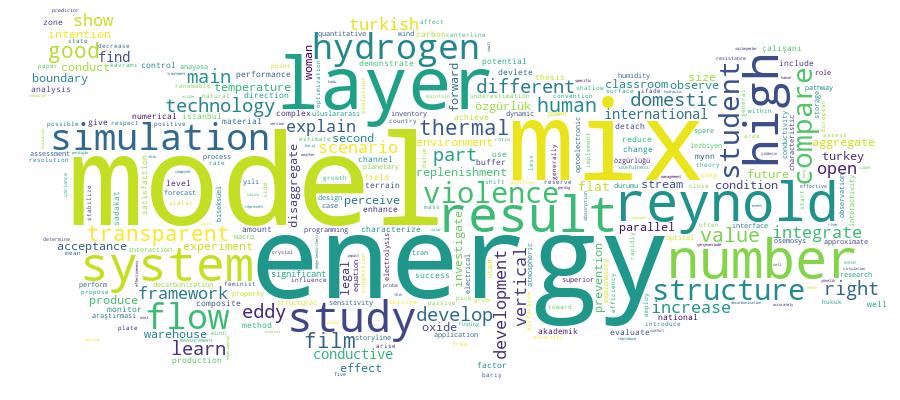
Competency Cloud
17 results
Scholarly Output Search Results
Now showing 1 - 10 of 17
Conference Object Flow Structure in a Mixing Layer Developing Over Flat Bed at High Reynolds Numbers(Crc Press-Balkema, 2016) Kirkil, G.Results of a high resolution Detached Eddy Simulation (DES) are used to characterize the evolution of a shallow mixing layer developing between two parallel streams in a long open channel with a flat bed at a high Reynolds number (Re-D = 160,000). The influence of Reynolds number on the development of the mixing layer as well as the vertical non-uniformity in the mixing layer structure is discussed. The numerical results show that as Reynolds number increases, the mixing layer grows rapidly but also stabilizes more quickly. The shift of the centerline of the mixing layer is toward the low-speed side is less for high Reynolds number simulation than low Reynolds number simulation. Mixing layer growth rate and its change in the vertical direction are compared with experiments and a simulation at Re-D = 16,000. Passive scalar is introduced at the tip of the splitter plate close to the free surface to estimate the size of the mixing structures based on mass transport.Conference Object Citation - Scopus: 1Genesys-Mod Turkey: Quantitative Scenarios for Low Carbon Futures of the Turkish Energy System(IEEE Computer Society, 2022) Hasturk, I.S.; Celebi, E.; Yucekaya, A.D.; Kirkil, G.This paper examines the quantitative scenarios for low-carbon futures of the Turkish energy system at aggregated (country level) and regionally disaggregated (NUTS-1 level) levels. We have employed four different storylines for the future European energy system. They are quantified and implemented for the European energy system (30 regions, mostly single countries, including Turkey) using the open-source global energy system model, GENeSYS-MOD v3.0. We have compared the results of all scenarios at aggregated and disaggregated levels and found that there are significant differences among them. Specifically, the hydrogen production (and its use) has increased considerably in the disaggregated model when compared to the aggregated level results. The major reason for these differences is found to be the better estimation of regional renewable capacity factors (wind and solar) in the disaggregated level compared to aggregated level. © 2022 IEEE.Technical Report Türkiye’de Özel Sektör Çalışanı Lezbiyen, Gey, Biseksüel, Trans ve İntersekslerin Durumu : 2019 Yılı Araştırması(Kadir Has University, 2019) Göregenli, Melek; O’Neil, Mary Lou; Ergün, Reyda; Değirmenci, Selma; Erkengel, Doğancan; Köylü, Murat[Abstract Not Available]Article Citation - WoS: 3Citation - Scopus: 2Evaluation of Gas-Fired Combi Boilers with HF-AHP-MULTIMOORA(Hindawi Ltd, 2022) Samanlıoğlu, Funda; Ayag, Zeki; Kirkil, Goekhan; Yucal, EsraThere are many alternative gas-fired combi boilers that can be used to heat residential homes. Evaluation and selection of gas-fired combi boilers for buildings is an intricate multi-criteria decision-making (MCDM) problem involving perhaps contradictory quantifiable and qualitative criteria. In this research, as the MCDM approach, hesitant fuzzy linguistic analytic hierarchy process (HF-AHP) and hesitant fuzzy linguistic multiple objective optimization based on ratio analysis plus full multiplicative form (MULTIMOORA) (HF-MULTIMOORA) are integrated to assess and rank combi boiler alternatives for buildings. First, with HF-AHP, fuzzy criteria weights are determined and then with HF-MULTIMOORA, boiler alternatives are ranked from best to worst. In this integrated HF-AHP-MULTIMOORA method, evaluations of decision-makers are combined with fuzzy envelope approach and then triangular fuzzy numbers are utilized. For comparison analysis, HF-AHP-TOPSIS method is also applied to the same problem. A case study in Turkey is presented where ten combi boiler alternatives are assessed based on fifteen criteria by five decision-makers. We have used various selection criteria for boilers ranging from maximum temperature, heating capacity up to environmental effects and decided on the best combi boiler for heating residential buildings in Turkey.Article Robust HMM-Based Remaining Useful Life Estimation Using a Ridge-Regularized EM Algorithm(MDPI, 2026) Kucukdag, Halime Beyza; Kirkil, Gokhan; Hekimoglu, MustafaEstimating the remaining useful life (RUL) of engineering systems is crucial for maintenance planning and the reliability of complex mechanical units. Accurate RUL predictions support timely interventions and help to prevent unexpected failures. This study proposes a statistically robust framework that models degradation signals up to the end of life using a hidden Markov model (HMM) with a simple-failure structure and an absorbing terminal state. The proposed method estimates state-dependent linear emission parameters and transition probabilities using a ridge-regularized expectation-maximization (EM) algorithm. The ridge penalty stabilizes slope estimates under limited data, while a robust Huber-based scale estimator reduces sensitivity to outliers in the sensor-derived health indicator. RUL is computed as a weighted expected time to absorption, combining transient-state survival characteristics with smoothed posterior-state probabilities obtained via the forward-backward algorithm. This yields a low-variance state-aware estimator that preserves the probabilistic structure of the HMM. Simulation studies show that the proposed ridge-regularized EM significantly reduces parameter variance and improves predictive accuracy compared with the baseline weighted least squares EM (WLS-EM). A real-data case analysis demonstrates further improvements in RUL estimation accuracy and smoother, more reliable prediction trajectories. Overall, the framework provides a robust and interpretable approach for practical prognostics applications.Master Thesis Kadına Yönelik Şiddet ve Ev İçi Şiddetin İlgili Uluslararası Sözleşmeler ve 6284 Sayılı Kanun Çerçevesinde Değerlendirilmesi(Kadir Has Üniversitesi, 2020) Gündoğmuş, Rabia; Umuroğlu, Reyda ErgünThe purpose of writing this master's thesis is primarily to explain the gradual development of how violence against women and domestic violence are evaluated in human rights law. The legal framework on the prevention of violence against women and domestic violence in Turkey, which is regulated in parallel with international human rights law, is given under the second main title of the second part of the thesis. The main issue that the thesis seeks to put forward is how much respect is observed in the application of national law on violence against women and domestic violence and the international human rights law, which is a part of this law. After explaining the general concepts on the subject, the history of feminist theory is given until the end of the second wave. This is because a legal framework for the prevention of domestic violence is possible through public/private debates in radical feminist theory. However, since this study was conducted under the master of law program, positive developments in human rights law have been given place mainly. Developments in international positive human rights law are explained in historical order. The Istanbul Convention, which is a turning point in achieving a legal framework for the prevention and elimination of domestic violence, was taken as the starting point of the second part of the study. The binding effect of international human rights law on Turkish law was stated after the statements regarding the Istanbul Convention. Then the regulations in Law No. 6284 in national law were explained. The part that the thesis wants to put forward is; this is the section where the Law No. 6284 is evaluated in terms of implementation. It was found that the legal framework was largely in compliance with international standards, except for a few deficiencies, and that the main problem with national law is mainly due to implementation. In Turkey, where violence against women and domestic violence is very intense, the obligations related to prevention, protection and criminal liabilities arising from the Istanbul Convention and the law No. 6284 are not respected.Article Citation - WoS: 15Citation - Scopus: 23Students' Web-Based Activities Moderate the Effect of Human-Computer Factors on Their E-Learning Acceptance and Success During Covid-19 Pandemic(Taylor & Francis Inc, 2022) AL-Sayid, Fareed; Kirkil, GokhanThe purpose of this study is to investigate if students' activities on systems web-based moderate the effect of human-computer interaction (HCI) factors on ease of use and usefulness of e-learning and their success (SS) at the time of the COVID-19 pandemic. To answer the questions that addressed the relationship between HCI, e-learning acceptance, and SS, the researcher surveyed 103 students from Kadir Has University whose grade and activity logs were accessible. The survey was related to their perceived course webpage design, system and content quality, interactivity, usability and functionality, and self-assessment. The results show that most of the hypotheses of this study have been proven, a comprehensive conceptual model was developed, and the student grades in the online courses improved their GPA. The findings further reveal that students' activities moderate the effects of course environment and content quality on perceived usefulness and the effect of the course evaluation' system on perceived ease of use, where the changes in R-2 ranged between 0.041 and 0.074. That means including logs as a moderator would increase the explanatory power of the effect of HCI factors on e-learning acceptance which together explained 54.9% of the variance in perceived success (SS), where U is the strongest determinant of SS.Article Citation - WoS: 1Citation - Scopus: 2The Role of Hydrogen in the Energy Mix: a Scenario Analysis for Turkey Using Osemosys(Mdpi, 2024) Tetik, Hepnur; Kirkil, GokhanThe urgent need to tackle climate change drives the research on new technologies to help the transition of energy systems. Hydrogen is under significant consideration by many countries as a means to reach zero-carbon goals. Turkey has also started to develop hydrogen projects. In this study, the role of hydrogen in Turkey's energy system is assessed through energy modeling using the cost optimization analytical tool, Open Source Energy Modelling System (OSeMOSYS). The potential effects of hydrogen blending into the natural gas network in the Turkish energy system have been displayed by scenario development. The hydrogen is produced via electrolysis using renewable electricity. As a result, by using hydrogen, a significant reduction in carbon dioxide emissions was observed; however, the accumulated capital investment value increased. Furthermore, it was shown that hydrogen has the potential to reduce Turkey's energy import dependency by decreasing natural gas demand.Article An Integrated Framework for Internal Replenishment Processes of Warehouses Using Approximate Dynamic Programming(MDPI, 2025) Kalafat, Irem; Hekimoglu, Mustafa; Yucekaya, Ahmet Deniz; Kirkil, Gokhan; Ediger, Volkan S.; Yildirim, SendaWarehouses are vital in linking production to consumption, often using a forward-reserve layout to balance picking efficiency and bulk storage. However, replenishing the forward area from reserve storage is prone to delays and congestion, especially during high-demand periods. This study investigates the strategic use of buffer areas-intermediate zones between forward and reserve locations-to enhance flexibility and reduce bottlenecks. Although buffer zones are common in practice, they often lack a structured decision-making framework. We address this gap by developing an optimization model that integrates demand forecasts to guide daily replenishment decisions. To handle the computational complexity arising from large state and action spaces, we implement an approximate dynamic programming (ADP) approach using certainty-equivalent control within a rolling-horizon framework. A real-world case study from an automotive spare parts warehouse demonstrates the model's effectiveness. Results show that strategically integrating buffer zones with an ADP model significantly improves replenishment timing, reduces direct picking by up to 90%, minimizes congestion, and enhances overall flow of intra-warehouse inventory management.Article Citation - WoS: 3Citation - Scopus: 3Superior Conductivity of Transparent Zno/Mos2< Composite Films for Optoelectronic and Solar Cell Applications(Mdpi, 2023) Tareq, Shahad; Kirkil, Gokhan; OEzugur Uysal, Bengue; Ozugur Uysal, BenguThe use of transparent conductive oxides in optoelectronics created a revolution where new-generation materials with high transmittance, low sheet resistance values, durability, and portability can be achieved without decreasing efficiency or increasing costs. Transparent ZnO/MoS2 sandwich-structured conductive composite films were produced in this study via the sol-gel method, which is considered the most efficient method due to its simple process and low cost. The crystal structure properties of ZnO/MoS2 were characterized via X-ray diffraction (XRD) patterns. The crystal sizes of ZnO films doped with different amounts of MoS2 were determined. A UV-visible absorption spectrometer was used to perform the spectroscopic analysis of the film. The area under the absorption curve and the full width of the half-maxima of absorbance data were calculated. Using these values, the optimum amount of MoS2 was determined for the best additive distribution. In addition, in order to determine the best transparent conductive material, resistance values measured via the four-point probe method were compared for different MoS2 additive amounts. The optical and electrical characterizations of transparent ZnO/MoS2 conductive oxide films were investigated. According to the parameters obtained via UV-vis spectroscopy, XRD, and four-point probe measurements, the most effective dispersion that exhibits a low width ratio and high resonance ratio was found for ZnO/MoS2 with a doping amount of 4 mg, the crystallite size of the films was found to be within the range of 21.5 and 24.6 nm, and these observations demonstrated a figure-of-merit value of more than 4.8 x 10(-2) with respect to these sandwich-structured films. Compared to the values of previous studies on various transparent ZnO-doped conductive oxide materials, it is possible to claim that these new films have a structure that is very similar to the transparent conductivity characteristics of other films, and they may even be superior relative to some MoS2 amounts.
