
Altan Atalay, Ayşe
Loading...

Profile URL
Name Variants
A., Ayşe
Altan Atalay, AYŞE
Ayse, Altan Atalay
Altan Atalay, Ayşe
Altan Atalay,Ayse
A. Altan Atalay
Atalay A.
Altan Atalay,A.
ALTAN ATALAY, AYŞE
Altan Atalay, Ayse
ALTAN ATALAY, Ayşe
AYŞE ALTAN ATALAY
A.,Ayse
Ayşe Altan Atalay
Altan Atalay, A.
Altan-Atalay A.
A., Ayse
Ayşe ALTAN ATALAY
Atalay, Ayşe Altan
Altan-atalay, Ayşe
Altan-Atalay, A.
Altan-Atalay, Ayse
Altan Atalay, AYŞE
Ayse, Altan Atalay
Altan Atalay, Ayşe
Altan Atalay,Ayse
A. Altan Atalay
Atalay A.
Altan Atalay,A.
ALTAN ATALAY, AYŞE
Altan Atalay, Ayse
ALTAN ATALAY, Ayşe
AYŞE ALTAN ATALAY
A.,Ayse
Ayşe Altan Atalay
Altan Atalay, A.
Altan-Atalay A.
A., Ayse
Ayşe ALTAN ATALAY
Atalay, Ayşe Altan
Altan-atalay, Ayşe
Altan-Atalay, A.
Altan-Atalay, Ayse
Job Title
Dr. Öğr. Üyesi
Email Address
Main Affiliation
Psychology
Psychology
03. Faculty of Economics, Administrative and Social Sciences
01. Kadir Has University
Psychology
03. Faculty of Economics, Administrative and Social Sciences
01. Kadir Has University
Status
Current Staff
Website
ORCID ID
Scopus Author ID
Turkish CoHE Profile ID
Google Scholar ID
WoS Researcher ID
Sustainable Development Goals
15
LIFE ON LAND

0
Research Products
6
CLEAN WATER AND SANITATION

0
Research Products
7
AFFORDABLE AND CLEAN ENERGY

0
Research Products
9
INDUSTRY, INNOVATION AND INFRASTRUCTURE

0
Research Products
4
QUALITY EDUCATION

0
Research Products
2
ZERO HUNGER

0
Research Products
17
PARTNERSHIPS FOR THE GOALS

0
Research Products
8
DECENT WORK AND ECONOMIC GROWTH

0
Research Products
1
NO POVERTY

0
Research Products
5
GENDER EQUALITY

0
Research Products
14
LIFE BELOW WATER

0
Research Products
16
PEACE, JUSTICE AND STRONG INSTITUTIONS

0
Research Products
10
REDUCED INEQUALITIES

0
Research Products
12
RESPONSIBLE CONSUMPTION AND PRODUCTION

0
Research Products
13
CLIMATE ACTION

0
Research Products
11
SUSTAINABLE CITIES AND COMMUNITIES

0
Research Products
3
GOOD HEALTH AND WELL-BEING

1
Research Products

Documents
50
Citations
398
h-index
12

Documents
43
Citations
278

Scholarly Output
15
Articles
15
Views / Downloads
6/0
Supervised MSc Theses
0
Supervised PhD Theses
0
WoS Citation Count
38
Scopus Citation Count
36
WoS h-index
3
Scopus h-index
3
Patents
0
Projects
0
WoS Citations per Publication
2.53
Scopus Citations per Publication
2.40
Open Access Source
7
Supervised Theses
0
| Journal | Count |
|---|---|
| Current Psychology | 4 |
| International Journal of Cognitive Therapy | 2 |
| Cognitive Therapy and Research | 1 |
| Emotion | 1 |
| Frontiers in Psychiatry | 1 |
Current Page: 1 / 3
Scopus Quartile Distribution
Competency Cloud
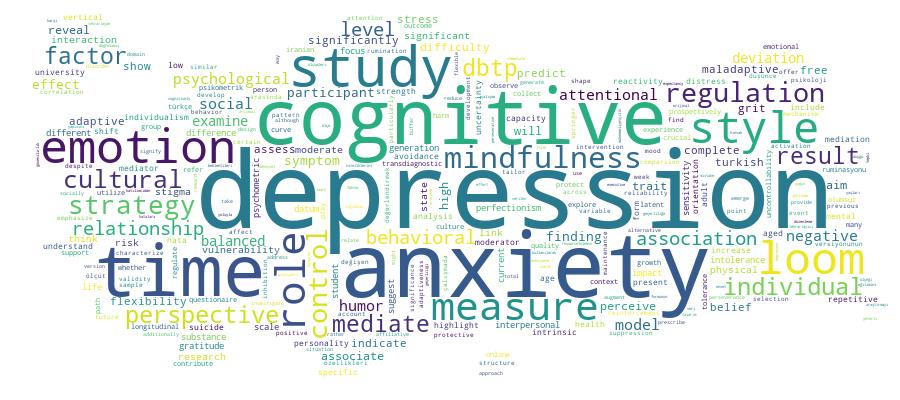
15 results
Scholarly Output Search Results
Now showing 1 - 10 of 15
Article Citation - WoS: 2Citation - Scopus: 2Understanding the Immediate and Longitudinal Effects of Emotion Reactivity and Deviation From the Balanced Time Perspective on Symptoms of Depression and Anxiety: Latent Growth Curve Modeling(Springer int Publ Ag, 2024) Ranjbar, Hamed Abdollahpour; Altan-Atalay, Ayse; Eskin, Mehmet; Abdollahpour Ranjbar, HamedEmotion reactivity (ER) captures the depth, sensitivity, and endurance of our emotional reactions, while deviation from a balanced time perspective (DBTP) characterizes our inflexibility and rigidity in adhering to specific time frames. This study investigates how ER and DBTP might predict the symptoms of depression and anxiety and DBTP's mediating role between ER and the symptoms of anxiety and depression in a three-wave longitudinal investigation. Data from 148 university students (82 males, 55.4%) with the age range of 18-29 (Mage = 19.92, SDage = 1.36) were collected at three time intervals using Emotion Reactivity Scale, Zimbardo Time Perspective Inventory, Future Negative subscale, Generalized Anxiety Disorder-7, and Patient Health Questionnaire-9. The study utilized latent growth curve modeling (LGCM) within a structural equation modeling framework. Results showed that greater DBTP at baseline predicted increased anxiety and depression symptoms and longitudinally reduced anxiety symptoms. The mediation model clarified that, initially, DBTP mediated the relationship between ER and anxiety/depression symptoms; however, over time, DBTP functioned as a suppressor of anxiety symptoms. This study establishes DBTP's predictive and dynamic significance for anxiety and depression, unveiling its mediating role in the interplay with emotional reactivity. These findings can inform tailored therapies addressing ER and temporal biases in this population.Article Perseverative Effort and Grit But Not Gratitude Are Protective Against the Onset of Anxiety for Cognitively At-Risk Individuals(Routledge Journals, Taylor & Francis LTD, 2025) Riskind, John H.; Altan-Atalay, Ayse; Sison, Jacqueline; Kleiman, EvanGrit and gratitude protect against depression caused by cognitive vulnerability factors like hopelessness and rumination. This study examined whether these personality strengths could buffer against a cognitive vulnerability for anxiety, the looming cognitive style (LCS). A prospective design was used with university students (N = 247; 86.2% female; aged between 18 and 60) completing online questionnaires two times 6 weeks apart that assessed LCS, grit, gratitude, and anxiety and depression. Path analyses revealed that LCS had a significant main effect and a theoretically expected interaction effect on anxiety symptoms with "grit perseverance but not with "grit consistency" or gratitude. Neither LCS, grit perseverance nor gratitude had any effects on depression symptoms, although an effect emerged for grit consistency. This study is the first to our knowledge to examine how personality strengths protect individuals against a cognitive vulnerability that is more specific to anxiety symptomatology than to depression. Along with other studies, the findings further suggest that a crucial way grit and personality strengths provide benefit is by protecting against cognitive vulnerabilities.Article Tolerance of Uncontrollability and Psychopathology: the Role of Maladaptive Emotion Regulation(Springer, 2025) Şener, G.; Altan-Atalay, A.Background: Tolerance of uncontrollability (TOU) can be defined as the ability to endure the discomfort resulting from uncontrollable events. In the absence of perceived control, people utilize strategies that regulate and enhance the inner perception of control. Repetitive negative thinking (RNT) and thought suppression (TS) are some of the strategies that give illusory control in the short term. However, many studies revealed that these strategies increase distress in the long term. The present study aimed to explore the relationship between TOU, RNT, TS, depression, and anxiety. It was anticipated that TOU would be associated with both depression and anxiety, and RNT and TS would mediate these relationships. Method: A sample of 448 participants aged between 17 and 56 (80.4% females) completed measures assessing TOU, RNT, TS, depression, and anxiety. Results: Findings showed that higher levels of TOU were associated with low levels of depression and anxiety, however when anxiety was controlled, the correlation with depression disappeared. While RNT was the mediator in both outcomes, TS only mediated the relationship between TOU and anxiety. Conclusions: The current study emphasizes that TOU can be a concept specific to anxiety and highlights one of the mechanisms behind TOU and psychological distress. © The Author(s), under exclusive licence to Springer Science+Business Media, LLC, part of Springer Nature 2024.Article Citation - WoS: 14Citation - Scopus: 13Cultural Context Shapes the Selection and Adaptiveness of Interpersonal Emotion Regulation Strategies(Amer Psychological Assoc, 2024) Pruessner, Luise; Altan-Atalay, AyseIn everyday life, we commonly experience, express, and regulate our emotions in interpersonal contexts. However, much of the existing research on utilizing others for modulating one's emotions has focused on Western, individualistic cultures, leaving a significant gap in understanding how the selection and adaptiveness of interpersonal emotion regulation (IER) strategies vary across cultural contexts. This cross-national comparison study aims to bridge this gap by examining intrinsic IER in 1,187 participants from Turkey and Germany, which are characterized by different cultural norms, values, and socialization practices regarding emotional experience and expression. All participants completed measures of intrinsic IER strategies alongside measures of adaptive outcomes, including depression, anxiety, negative affect, and positive affect. The results revealed cross-national differences between Turkish and German individuals in terms of the intrinsic IER strategies most frequently selected and their associations with depression, anxiety, negative affect, and positive affect. These findings emphasize the significance of cultural context in intrinsic IER and offer insights into the conditions under which these strategies are linked to adaptive outcomes. By recognizing the cultural nuances in how people navigate their emotions via social interactions, clinicians and researchers can develop more culturally sensitive interventions tailored to the specific needs of individuals in diverse cultural contexts.Article Citation - WoS: 3Citation - Scopus: 3Looming Cognitive Style: How It Mediates the Association of Harm Avoidance With Trait and State Emotion Regulation Difficulties(Springer int Publ Ag, 2023) Altan-Atalay, Ayse; Gokdag, Ceren; King, Naz; Tezel, Selin; Sozeri, YarenUnderstanding the factors that are associated with individual differences in emotion regulation (ER) difficulties, which is one of the common transdiagnostic factors underlying many psychological disorders, is crucial for understanding and treating psychological disorders. The aim of the two investigations was to examine the mediator role of looming cognitive style (LCS) in the relationship of harm avoidance (HA) with both state and trait forms of ER difficulty. A total of 362 adults participated in Study 1 and 236 adults in Study 2. They completed measurements of HA, LCS, and ER. In Study 2, participants were induced into an anxious mood state and filled out a scale measuring ER in that process. Path analysis demonstrated that social looming between HA and trait ER and physical looming between HA and state ER had mediator roles. Finally, the alternative models which included HA and ER as the outcomes yielded poor fit. The results revealed that LCS significantly mediated the relationship of HA with both trait and state forms of ER difficulty, providing support for the model that aimed to explain how LCS contributes to the development and maintenance of psychological disorders.Article Citation - WoS: 2Attentional Control Scale-Turkish Version: Psychometric Qualities, Factor Structure and Its Comparison with Behavioral Measures of Executive Attention(ODTU-AYNA Klinik Psikoloji Destek Unitesi, 2024) Altan-Atalay, Ayse; Cinli, Dilem; Aksungur, Sebla Umay; Turkakin, Esin; Aksungur, UmayAttentional control refers to the capacity to voluntarily control attentional resources in a flexible manner. Attentional control was reported to play a fundamental role in self-regulation, emotion regulation, delay of gratification, and psychological distress. The Attentional Control Scale (ACS) was developed to measure perceived attentional control based on shifting and focusing dimensions. The present studies aimed to adapt the Turkish version of ACS and asses its psychometric characteristics. Study 1 aimed to explore the psychometric qualities of the Turkish version with a group of Turkish individuals (N = 428, 306 women) between the ages of 18 and 68 and supported the two-factor model of ACS consisting of 17 items in total. The results supported that shifting, focusing, and total ACS showed adequate internal consistency, test-retest reliability, and convergent validity evidence based on its significant correlations with measures of anxiety, depression, and repetitive negative thinking, signifying its proper psychometric characteristics. In Study 2 (N = 97, 65 women), the association of ACS with behavioral attentional control measures was examined, and non-significant associations between self-report and behavioral measures of attentional control were denoted. These findings signified that rather than indicating the individual's actual attentional control capacity, ACS assessed how the individual perceives their own attention control capacities. Taken together, the results suggest that the Turkish form of ACS is a valid and reliable scale that can be used to assess perceived attentional control capacity based on shifting and focusing domains, particularly in the research setting.Article Cognitive Styles and Behavioral Systems: Linking Looming Cognitive Style and Reinforcement Sensitivity(Pergamon-elsevier Science Ltd, 2025) Altan-Atalay, Ayse; Gokdag, Ceren; King, NazBackground: Looming cognitive style, with its social and physical subtypes, is highly influential on how individuals perceive and respond to threats. Despite its robust relationship with anxiety, its relationship with other traits is underexplored. Revised reward sensitivity theory also addresses individual differences in approach, avoidance, and susceptibility to fear and anxiety. The current study examined associations of behavioral activation (BAS), inhibition (BIS), and fight-flight-freeze systems (FFFS) with social and physical looming. Method: Data were collected online from 401 adults (343 women) between the ages 18 and 65 (M = 22.78 (SD = 6.57) using measures of looming cognitive style, reinforcement sensitivity, anxiety, and depression. Results: The findings showed that social and physical looming were positively associated with BIS and FFFS, controlling for age, gender, and anxiety and depression symptoms. Additionally, social looming was negatively associated with BAS. Conclusions: The findings indicate that social and physical looming are linked to heightened sensitivity to threat and, in the case of social looming, reduced reward sensitivity. These results underscore the role of looming cognitive style in shaping anxiety-related behaviors and responses to environmental stimuli.Article The Relationship Between Perfectionism and Stress Generation: the Moderating Role of Looming Cognitive Style(Springer, 2025) Abdulcebbar, Amal; Altan-Atalay, AyseThe stress generation hypothesis suggests that certain maladaptive personality traits significantly contribute to the generation of negative life events (NLEs) in people's lives through inherent maladaptive mechanisms. Previous research indicated that the impact of stress generating risk factors might be augmented or weakened by other transdiagnostic risk factors such as the looming cognitive style (LCS) which includes physical and social looming that have been found to predict different domains of life stressors. Therefore, the present study aimed to examine the moderating roles of the dimensions of the LCS separately, in the relationship between perfectionism (i.e., socially prescribed perfectionism) and stress generation in a group of emerging adults. One-hundred and ninety nine (134 females) undergraduate students aged 18-25 (M = 20.23, SD = 1.56) completed an online questionnaire that measured their level of perfectionism, LCS, and NLEs twice over a six-week interval. The results showed that only social looming significantly moderated the relationship between socially prescribed perfectionism (SPP) and interpersonal NLEs at time 2. These findings show the augmenting impact of social looming on the stress generating effect of elevated SPP, highlighting the importance of examining co-occuring vulnerabilities rather than single risk factors in the stress generation process.Article Citation - WoS: 3Citation - Scopus: 3The Roles of Intolerance of Uncertainty and Mindfulness in Psychological Distress: a Two-Wave Longitudinal Study(Springer, 2024) Altan-Atalay, Ayse; Abdulcebbar, Amal; Kantarci, Lacin; Yilmaz, ErturkIntolerance of uncertainty (IU) is a vulnerability factor that is believed to play a significant role in the development and maintenance of many affective disorders. Previous research indicated that the strength of the association between IU and psychological distress tend to change depending on certain trait characteristics. Therefore, the current study aimed to examine whether the interaction between IU and mindfulness will prospectively predict anxiety and depression measured five weeks later. The data were collected from 243 university students (129 female) between ages 18 and 29 at two different time points via questionnaires assessing intolerance of uncertainty, mindfulness, anxiety, and depression at time 1, followed by only measures of anxiety and depression at time 2. The results revealed that higher IU scores were associated with higher levels of depression for the participants who have low levels of mindfulness. A similar pattern was not observed for anxiety. The findings indicated that mindfulness prospectively predicts lower levels of depression only for the individuals who have lower levels of intolerance of uncertainty.Article Hata Ruminasyonu Ölçeği: Türkçe Versiyonunun Psikometrik Özellikleri(Association for Clinical Psychology Research, 2025) Kaya-kiziloz, Burcu; Emir, Emirhan; Özdemir, Ahmet Berk; Altan-Atalay, AyşeHata Ruminasyonu Ölçeği (HRÖ), algılanan hatalara karşı yoğun, tekrarlayıcı olumsuz düşünce şeklinde verilen bir tepki olan hata ruminasyonu (HR) eğilimini değerlendirmek için geliştirilmiştir. Bu çalışma, HRÖ'nün Türkçe versiyonunun psikometrik niteliklerini 2 çalışmada araştırmayı amaç- lamıştır. Yaşları 18 ile 56 arasında değişen 214 katılımcıdan (118 kadın) (Ort. = 33.45, SS = 11.82) HR, tekrarlayan olumsuz düşünce, mükemmeliyetçilik, erteleme, depresyon ve anksiyete ölçümleri yoluyla veri toplanmıştır. Bulgular orijinal faktör yapısını doğrulamış ve yeterli güvenilirlik, ya- kınsak ve artımsal geçerliliğe işaret etmiştir. İkinci çalışmada, HRÖ'nün ölçüt geçerliliği deneysel bir tasarım kullanılarak test edilmiştir. Katılımcılardan (yaşları 18 ile 28 arasında değişen 127 kişi) bir dizi hata veya düzenli bir olay yaptıklarını hayal etmeleri istenmiştir. Sonuçlar HRÖ'nün ölçüt geçerliliğini desteklemiştir. Sonuç olarak, HRÖ Türk bireylerde HR'yi değerlendirmek için kulla- nılabilir.
